Fat people deserve good rope. Why I wrote a zine on tying fat bodies, plus a few practical tips on placement, tension and suspension for shibari.
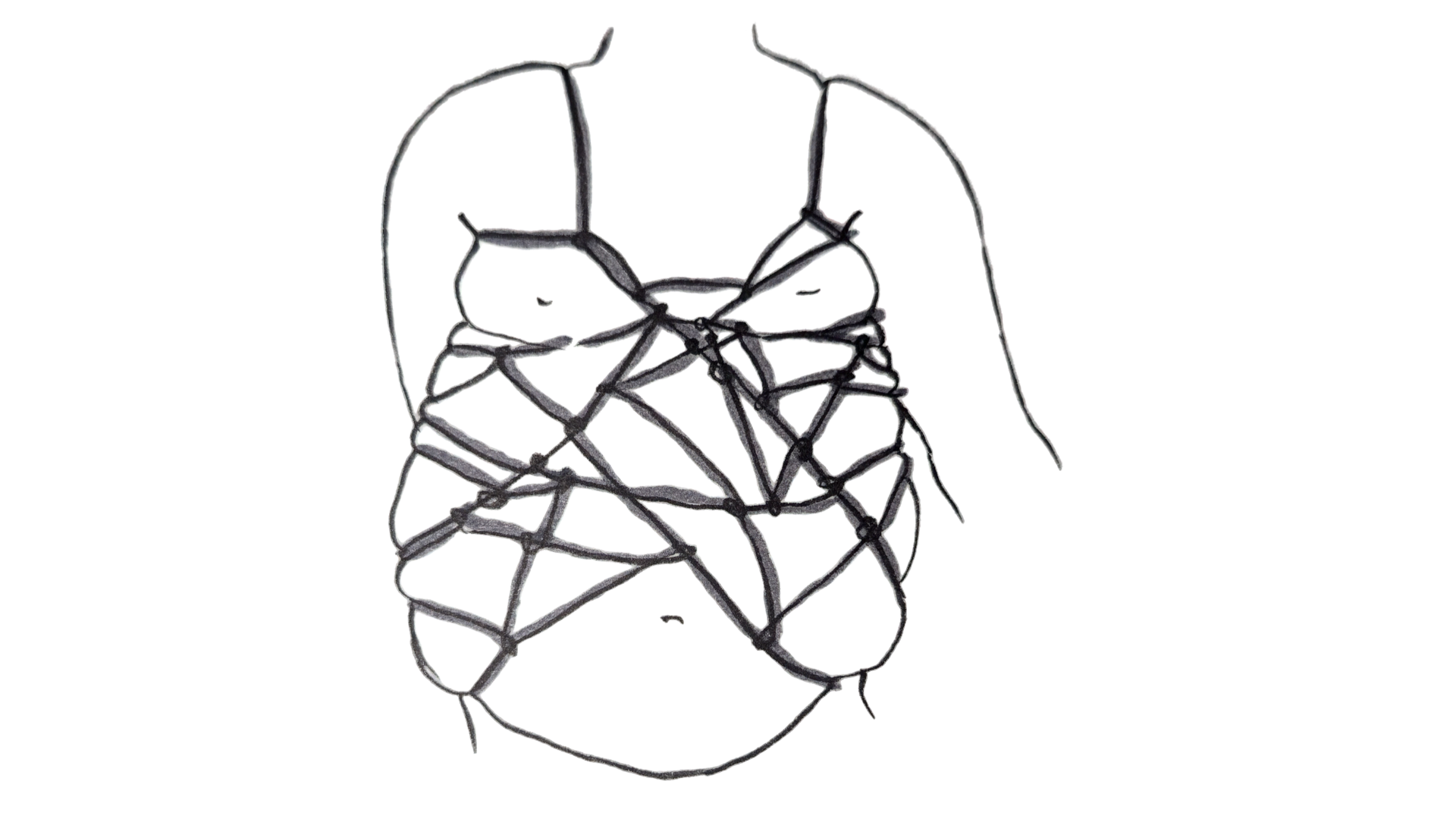
Fat people are everywhere. We are on the streets, in restaurants, dancing at parties and watching movies, even if you don’t notice us there. We face barriers when doing so, and in rope spaces we face even more obstacles. I wanted to write down why, and what to do about it.
When I go to a rope event as a fat person, I usually feel like the exception. We are rarely in the pictures and rarely teaching or performing, and our fat friends don’t get shibari events recommended to them. If you are in the room anyway, you try to fit in. You tense your body to take less space. You lift your limbs while someone ties you, so you would not be a burden. In suspension you try to imagine yourself lighter, so nobody hurts their back, even if you know that nobody beats gravity. All of this we do invisibly because of the shame and otherness we are made to feel.
Barriers to participation
The more barriers there are to taking part, the fewer of us come. Think of chairs that we cannot fit our asses in, or a pole dancing pole that might detach from the ceiling, or a teacher who is more worried about that than about the dancing. Rope has its own versions of this.
Fat phobia and ableism are very much alive in rope communities, and they show up as people organizing to get "fit for rope", as educators who do not know how to adapt their ties, and as being told you cannot be suspended safely. People who are only taking their first steps feel pressure to set impossible goals, like being pain free in a box tie - a tie with its background in military and police work and which is supposed to cause pain and vulnerability.
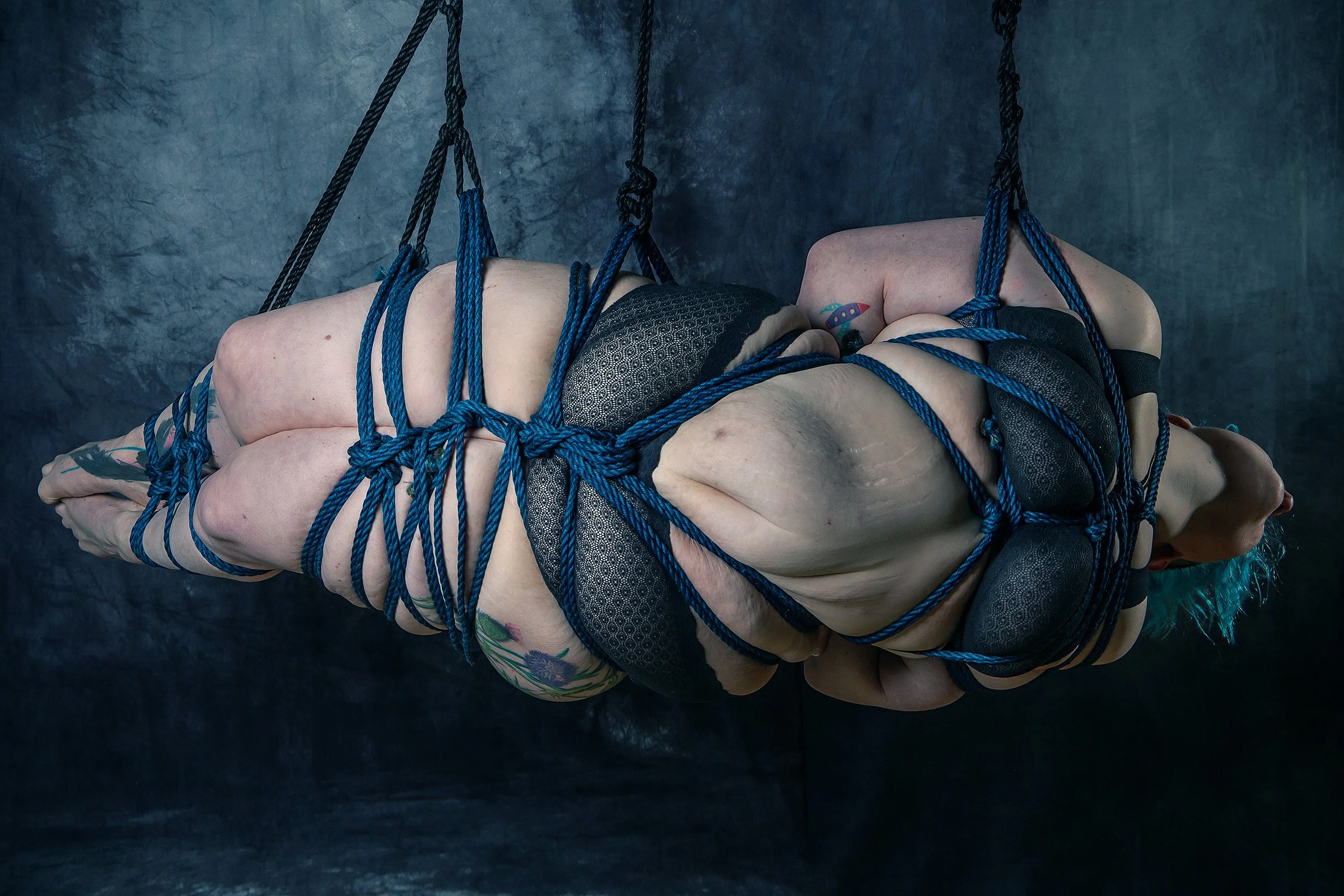
Photo: Renée De Sans / Mamana
On waiting for change before having fun
I want to say something about "fit for rope", because it sounds so reasonable. Who wouldn’t want to find motivation for getting into shape in something as fun as tying? Research on fitspiration, meaning posts meant to inspire fitness and health, has found a wide range of negative psychological effects (Cataldo et al. 2021), and exercising for outside reasons has been linked to poorer well-being (Maltby & Day, 2010).
If rope, exercise, movement or even extreme sports make you feel good, please do them. But if you do them so you would be accepted, you are carrying the message that you, as you are now, would not be good enough.
Expecting people to mold their bodies to fit a norm is gatekeeping, and it makes it harder for them to explore their desires and sexuality. It also brings power hierarchies and structural inequality into one of the few areas of life where we could have the chance to escape them. Rope is adults playing, so let us set our own rules.
How to move forward
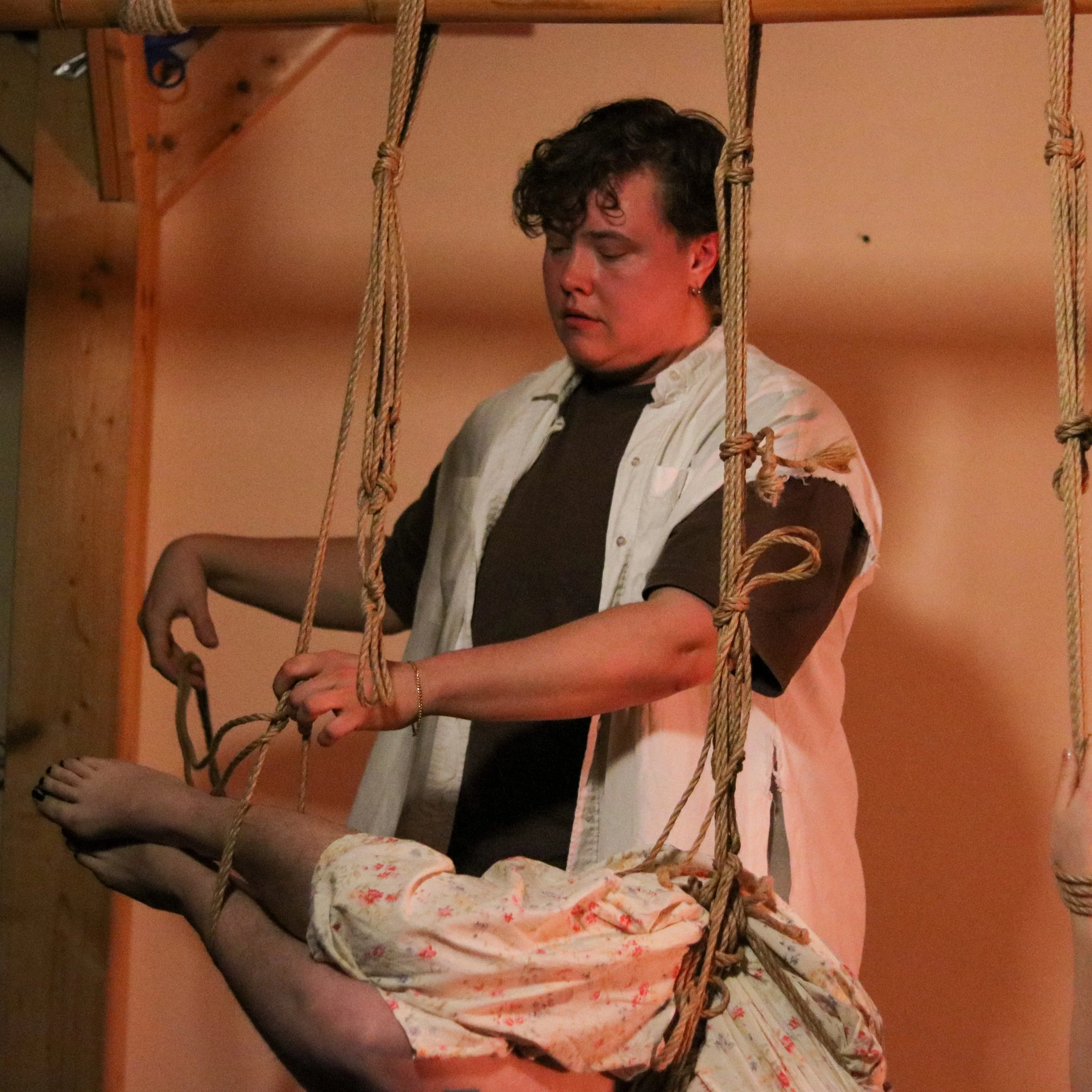
Learning to tie fat people is a political act. It says that nothing about our bodies makes them impossible to tie. I would also say that fat bodies make tying more juicy, since there is more landscape to appreciate, more skin to luxuriate in, more softness to hold the rope and more strength from carrying ourselves around.
A few things from the zine, so you can see how practical it gets:
See the body as geometric shapes. Bodies are tubes, cones, ovals and hourglasses. A ball on a hill rolls off and a ball in a valley stays put, and ropes do the same. So tie in the valley, or on the slope, or on the hill, but understand how to do that in a way that is safer and structurally sound. If wrists don’t overlap behind the back, it’s often not flexibility but geometry.
Use anatomy landmarks, not looks. The visual waist and the anatomical waist are sometimes in different places, and you can find the anatomical one from the hip bones at the back, whatever shape the belly has. For the the arm, place ropes no higher than the lower slope of the shoulder muscle, and place the rope on the pectoral muscle and under the shoulder blades.
Do not just add wraps. It is a very popular advice for fat people and it often makes ropes bunch up and hurt more. Splitting a band in half to leave a cushion of fat between the two halves works better, and so does adding cuffs on natural anchors like limbs, valleys and folds.
Suspension gets easier with the Three L's: lowering, leverage and a low point. Starting standing and moving towards the ground makes gravity your friend. Fat bottoms can collaborate when you lift the far points first and let they can put their weight in, rather than hoisting the heavy middle from the floor. A low suspension point lets you double up your suspension lines more easily to have more leverage.
Get the zine
The Guide to Tying Fat Bodies has much more info, including firmness and texture of different kinds of fat, web ties, futomomo, box tie, and tips for fat bottoms on how to relax, collaborate and be as present as you like (embodiment is not mandatory). It is full of drawings that show the placements, so you do not have to guess from my words.
Fat bodies are not harder to tie, they are different landscapes, with more curves, more valleys and more anchors. I made this zine because I wanted every fat person to have the chance to be tied well, and every rope teacher to have somewhere to start.
Fat people deserve good rope.